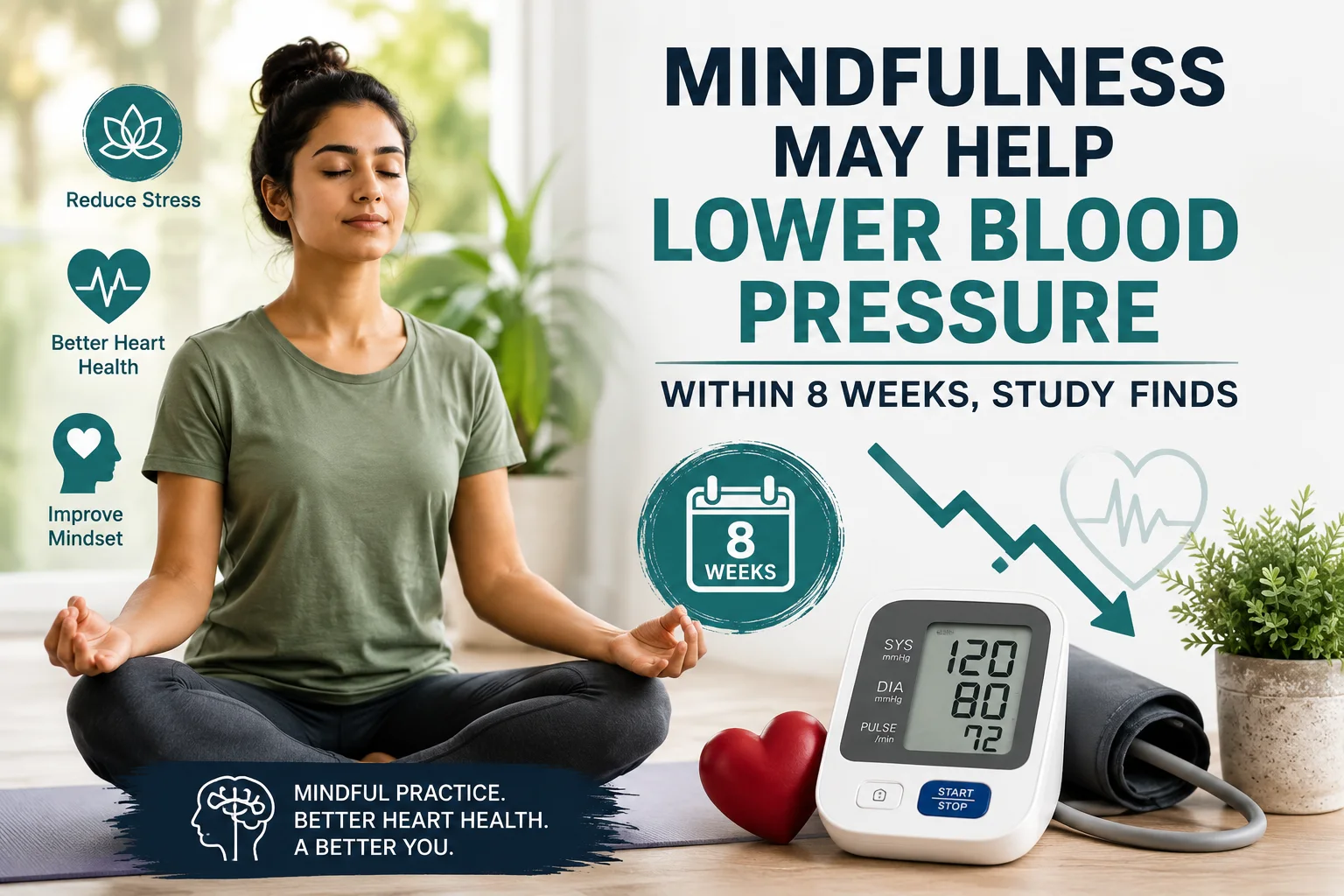
Can Mindfulness Help Lower Blood Pressure? Study Finds Changes Within 8 Weeks
Mindfulness is usually associated with feeling calmer or dealing with everyday stress. But a new review suggests it may have another benefit: helping improve some measures of heart health.Researchers from the University of Illinois Urbana-Champaign looked at 18 randomized controlled trials involving mindfulness and other positive-psychology programs. The studies included people who already had cardiovascular risk factors, including uncontrolled high blood pressure and heart failure.
The researchers found that some of the programs were linked to lower blood pressure and reduced levels of inflammation. The changes were seen in programs lasting roughly six to 12 weeks, with eight weeks showing particularly interesting results in some groups.
In studies involving people with hypertension or those recovering from coronary problems, eight-week mindfulness programs were associated with reductions in systolic blood pressure as well as inflammatory markers such as C-reactive protein and fibrinogen.
One 12-week digital program produced an even larger change. Participants saw their standard cuff-measured systolic blood pressure fall by 7.6 points, while central systolic pressure fell by 4.1 points, according to the researchers.
But there was an important detail in the findings.
People weren't simply told to meditate once in a while and left on their own. The programs that produced the most consistent results generally combined daily practice with weekly sessions or other regular support.
That support could take different forms. Some programs used apps and text messages, while others included phone calls, journaling, group sessions, or online meetings. Most of the programs lasted between six and 12 weeks.
The researchers also found that some of the benefits appeared to come from changes in everyday behavior.
One eight-week program used WhatsApp to give participants weekly sessions and small daily tasks. The aim was not just to improve their mental outlook but also to encourage more physical activity, healthier eating, and better adherence to prescribed medicines.
Another program that used motivational interviewing helped cardiac patients increase their activity by about 1,800 steps a day and also improved medication adherence.
That does not mean mindfulness can replace treatment for high blood pressure. The study is looking at mindfulness and positive-psychology approaches as possible additions to cardiovascular care, rather than alternatives to medicines or medical advice.
The researchers say the findings add to the growing evidence that mental and behavioral health can have a place in heart-health care.
For someone trying to improve their blood pressure, the takeaway is fairly simple: taking care of the mind may be useful alongside taking care of the body. But consistency appears to matter, and more research is still needed to understand how long the benefits last.
The review was published in Cardiology Clinics.